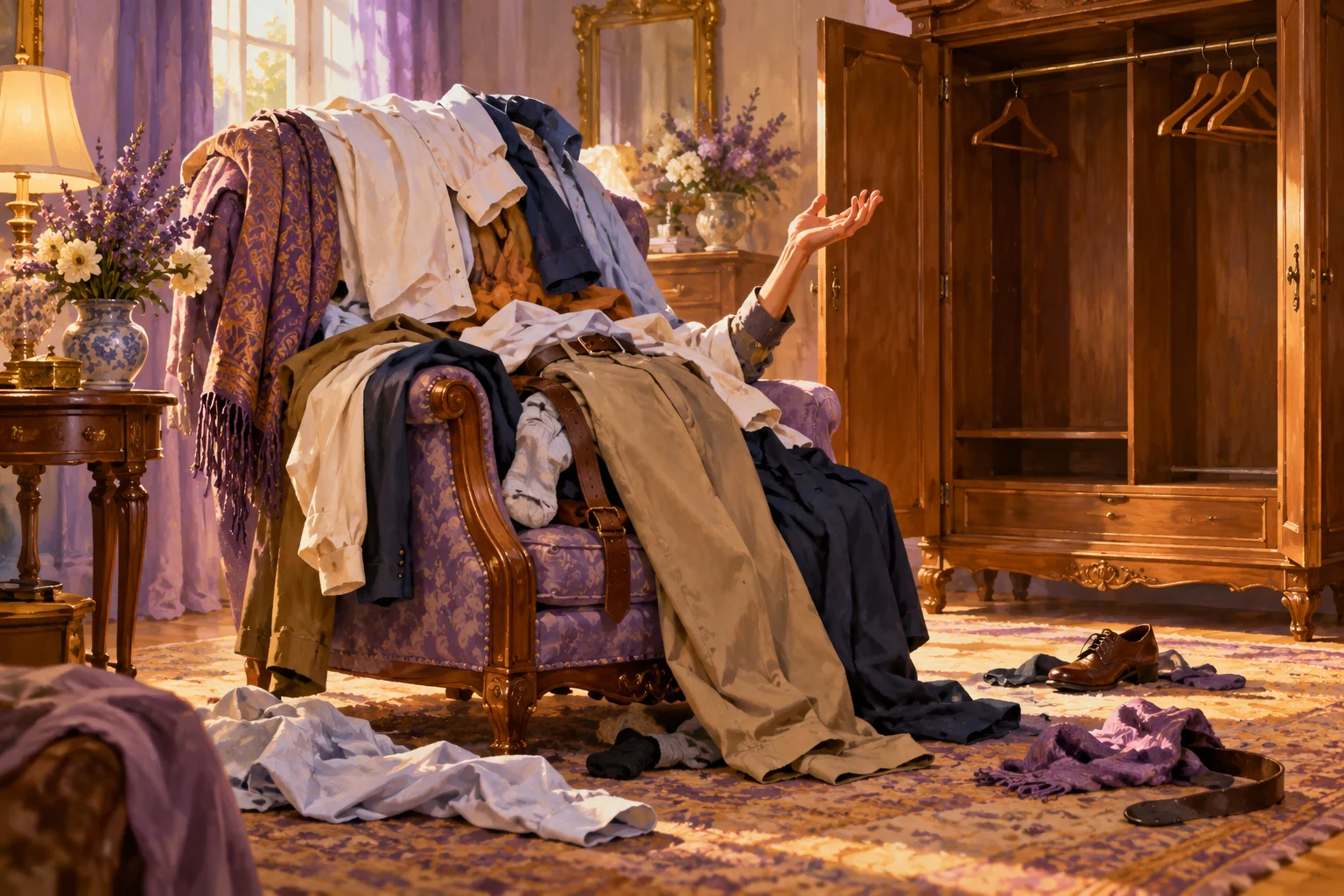
My friend sent me a message asking whether I'd like to get lunch next week.
I did want to get lunch next week. I like my friend. I like lunch. The question presented no significant obstacle.
I read it while carrying groceries, decided to answer when I put the bags down, and somehow crossed the narrow bridge between that intention and several days of silence.
The first acceptable reply
On the first day, the answer could have been: Yes! Thursday?
That would have handled everything. Two words and a day. A complete social transaction, performed with the efficiency of a person who has not yet made the transaction a comment on their character.
By the second day, I felt I should include Sorry, busy day yesterday.
I had been busy. I'd also watched a video about a man restoring a rusted pan, followed by another video about the same man restoring a different pan. There was no sensible way to include that in the explanation.
By the fourth day, “busy day” had become mathematically inadequate. I needed a busy week, and the lunch invitation was now about to expire.
I opened the message and considered saying, Sorry, just saw this.
I had not just seen it. The app knew. My friend knew. I knew. Even if nobody cared, I disliked beginning lunch negotiations with a small, easily disproved lie.
So I closed the message to allow a more honest answer to emerge.
The apology grows
On day six, I drafted a paragraph.
It began, I'm so sorry I've been terrible at replying.
This was true, but it placed a new obligation on my friend. She would now have to reassure me that I hadn't been terrible, despite the visible evidence above the reassurance.
Then I tried, Things have been a bit much.
Things had been ordinary. A parcel arrived. A dentist appointment needed moving. I bought the wrong bin bags. These were things, certainly, but I felt “a bit much” suggested a more compelling collection.
I deleted the paragraph.
My friend, meanwhile, went about her life without access to the considerable effort I was investing in not having lunch with her.
The historical phase
After two weeks, the message no longer looked like a message. It looked like evidence.
Every time I opened the app to answer someone else, it was there. My friend's face beside a polite question. The question had acquired the weight of a sealed letter found in an attic.
I couldn't simply write “Thursday?” now. Thursday belonged to an earlier era. Several Thursdays had come and gone without knowing they were involved.
I thought about sending a funny picture first. This might reestablish contact without directly addressing the lunch.
But what picture could reasonably account for fourteen days? A sufficiently funny dog might work, but I didn't want to make an animal responsible for repairing my manners.
I told my partner about the problem.
“Just reply,” he said.
This was excellent advice at the wrong scale. I was asking how to restore a minor diplomatic relationship. He was suggesting I use my thumbs.
The perfect moment
I decided to reply in the morning, when I would be calm and articulate.
In the morning, I was neither. I was late and couldn't find the coffee spoon. I answered three work messages, checked the weather, and read a discussion about whether you should rinse rice.
I had time to learn something about rice. I did not, apparently, have time to say I wanted to see a friend.
That evening I finally noticed what I was doing. I had taken a kind, easy invitation and built a reception desk around it. My friend was waiting outside while I revised the signage.
I wrote: I made this weird by forgetting to reply, then overthinking the reply. I'd really like lunch. Are you free next Thursday?
I pressed send before I could add a paragraph about the bin bags.
The response
She replied four minutes later.
Haha, yes. Twelve thirty?
That was it. No tribunal. No statement about friendship. No request for an itemized account of my week. She had been offered lunch and had answered about lunch, a skill I intended to study.
We met on Thursday. She ordered soup. I ordered a sandwich. We talked about her job, my family, and the surprisingly aggressive pigeon outside the window.
Halfway through, she said, “By the way, thanks for recommending that show.”
“Did you like it?”
“I haven't started it. I meant to tell you.”
She looked mildly guilty.
“No rush,” I said, with the spacious generosity of a man whose own case had recently been dismissed.