
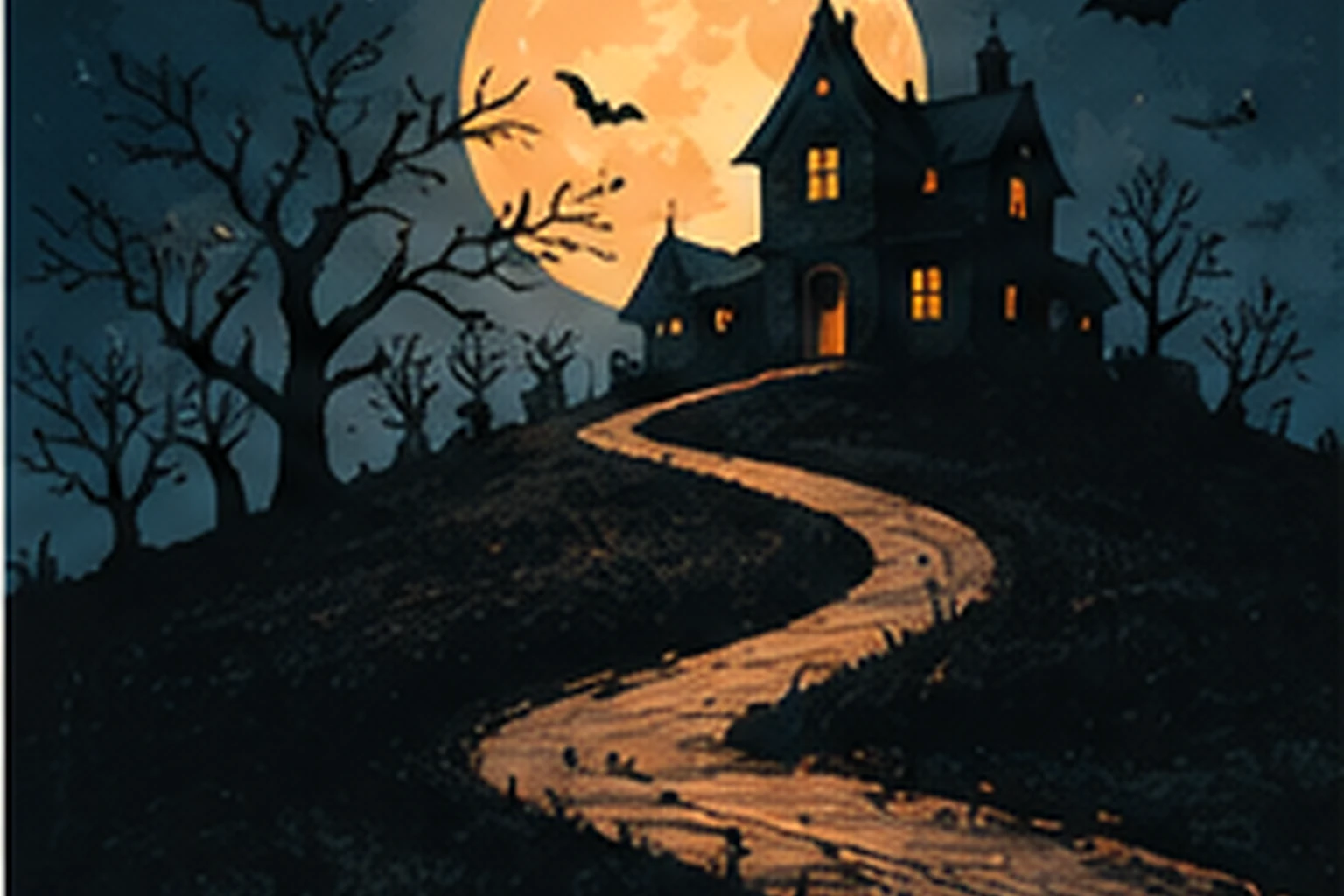
On Halloween we willingly walk toward things that would normally make us retreat. A porch becomes a graveyard, a neighbor's house becomes a castle, and a harmless motion-activated decoration produces a shriek that would be unreasonable in almost any other month. We know the plastic skeleton is not alive, at least in the usual sense, and yet our bodies may react before we finish reminding ourselves. The pleasure lies partly in the separation between feeling afraid and knowing we are safe. It offers a small laboratory for a much larger human experience: fear is both a valuable signal and an imperfect guide.
Fear exists for reasons that have little to do with horror movies. It can direct attention toward danger, prompt preparation, and help us avoid unnecessary harm. If a car approaches too quickly, a person does not need a committee to authorize stepping back. But fear is not a precision instrument. It responds to uncertainty, vivid images, and experiences that are easy to remember. We can become deeply uneasy about a dramatic but rare event while overlooking common hazards because they have become familiar. This does not mean emotion is foolish. It means emotion deserves context.
Storytelling takes advantage of that context problem. A creaking staircase is an ordinary maintenance issue until someone tells us the house is haunted. After that, each sound becomes evidence. We pay more attention to shadows, and silence itself starts to feel suspicious. The same pattern can appear outside fiction. A single alarming story can make an entire category of places or people seem dangerous. Once we expect trouble, ambiguous details may begin to support the expectation. That is one reason broad claims about risk deserve more than the most memorable example.
A useful response is not to demand that people stop feeling afraid. Telling someone that fear is irrational rarely reduces it and can make the conversation less honest. It is better to separate four questions: What exactly might happen? How likely is it, given the available evidence? How serious would the consequences be? What reasonable action would reduce the risk or soften its consequences? A vague fear often grows when all three questions remain mixed together. A concrete plan can reduce helplessness without pretending that uncertainty has disappeared.
Consider the difference between a general statement such as “technology is dangerous” and a specific concern about a family account being compromised. The first may produce endless unease because it has no boundaries. The second suggests actions: check authentication, review recovery information, remove unused access, and make backups. Similar reasoning applies to weather emergencies, health decisions, finances, and travel. Specificity does not guarantee safety, but it can turn fear into something other than a permanent mood.
There is one reason probability by itself is not enough. Some outcomes are unlikely but consequential enough to justify inexpensive preparation: smoke alarms, emergency supplies, and a plan for getting out of a building are reasonable even on an ordinary day. Other outcomes are vivid but do not support a proportionate response, however frightening an image may be. Good judgment is not simply calming down. It is asking whether the response fits both the evidence and the stakes.
Our fears are also shaped by who tells us stories. Families pass along warnings; institutions emphasize risks linked to their responsibilities; advertisers can present uncertainty as a reason to buy protection; political movements sometimes build identity around shared threats. Some warnings are justified and important. Others simplify complex situations into villains and victims. The task of a thoughtful listener is not to assume every warning is manipulation, but to examine the evidence, the proposed remedy, and who benefits from a particular interpretation.
There is an ethical dimension here. Fear can make strangers appear as symbols rather than people. A community under stress may become quicker to assign motives to unfamiliar behavior. A rumor can do more damage when it fits an existing anxiety. This is especially true when the costs fall on people with little power to correct the story. Responsible speech therefore includes a willingness to distinguish between a documented problem and a suspicion, and to resist sharing an alarming claim merely because it feels urgent.
Halloween also reminds us that fear can be social and playful. People gather to experience a carefully managed version of uncertainty together. They laugh after the surprise, admire the handmade decorations, and offer candy to strangers. The holiday works best when participants respect the difference between a welcome scare and an unwanted one. A small child may love a friendly pumpkin and dislike an aggressive mask. An adult may enjoy a ghost story but not a prank involving a real threat. Safety, consent, and consideration are part of what make the fun possible.
When the decorations come down, the more useful lesson can remain. Fear should neither be ignored nor given automatic authority. We can listen to it, ask what it is pointing toward, and check whether the story matches the world as carefully as we can observe it. The dark hallway might contain danger. It might also contain a coat hanging from a door. Wisdom consists partly in knowing when to switch on the light—and being willing to look again once it is on.