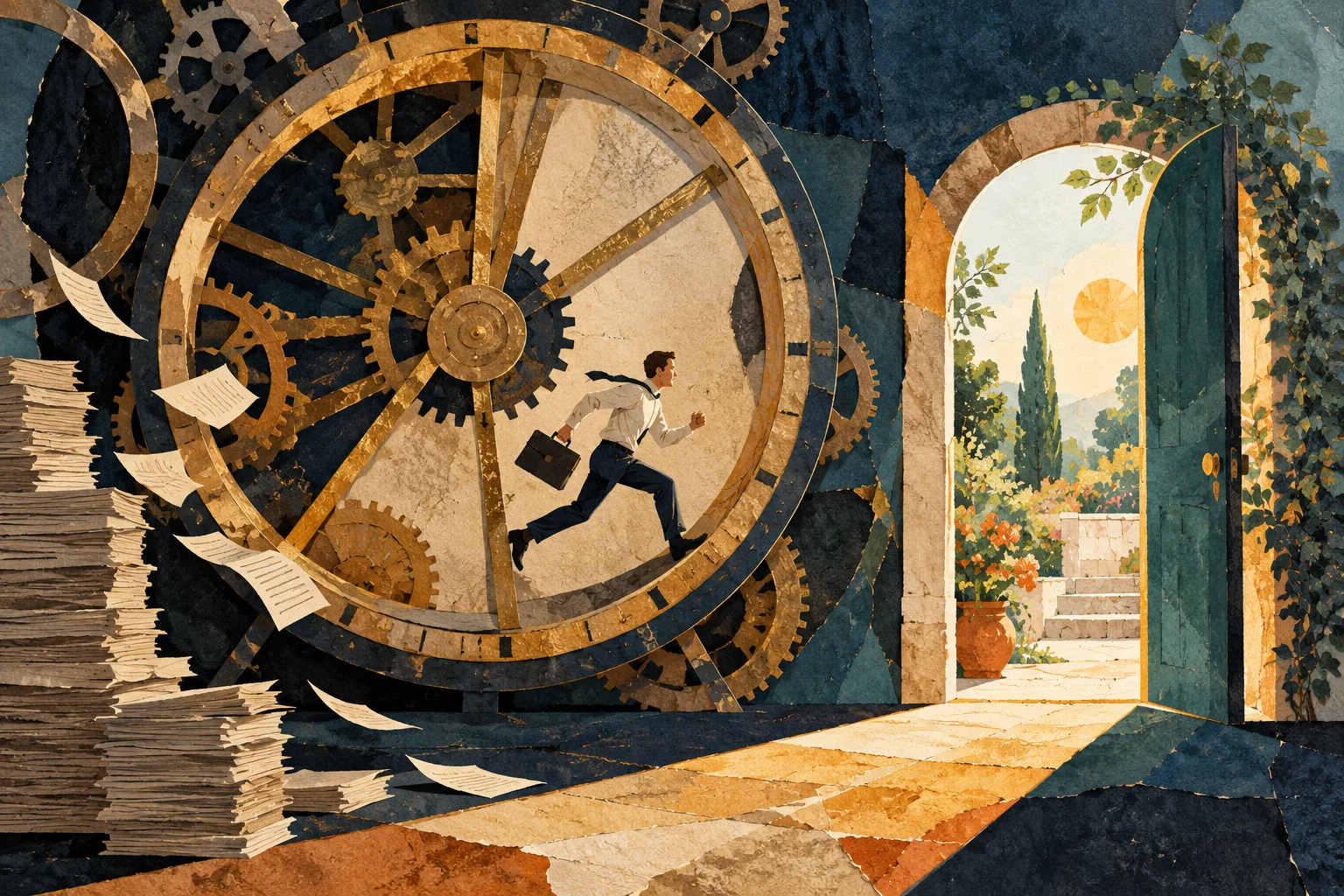
The modern miracle is not that complicated things exist. It is that complicated things arrive as one large button marked Continue.
Tap to pay. Tap to travel. Tap to store your photographs somewhere described, with meteorological optimism, as the cloud. Each action hides a substantial arrangement of people, machines, agreements, and failure modes.
This is often excellent design. You should not need to understand a power station to switch on a lamp. But the interface can make an important dependency disappear from view. When that dependency fails, convenience suddenly presents an invoice.
Notice what has been outsourced
Convenience can transfer effort, memory, judgment, or control. These are different exchanges.
A navigation app can reduce the effort of finding a route. A saved password can reduce the burden of remembering a credential. A recommendation system can shape what you consider. A subscription can make continued access depend on an ongoing commercial relationship.
None of those exchanges is automatically a mistake. The problem begins when we do not realize which exchange occurred. We think we purchased an object and discover we rented access. We think we delegated a chore and discover we also delegated the choice.
Test the exit
Before relying heavily on a service, ask an unfashionably practical question: how would I leave?
Can you export your files in a useful format? Do you know how to regain access if your phone disappears? Is there a workable alternative during an outage? Can someone else understand the arrangement if you are unavailable?
The answer need not be perfect independence. Independence itself takes work. A sensible goal is enough understanding and portability to avoid being surprised by the obvious dependencies.
Try one small export or recovery exercise before the need becomes urgent. Instructions have a way of becoming less friendly when read during a crisis.
Keep a little competence nearby
You do not have to reject automation to retain basic skills. Knowing roughly where you are helps when navigation fails. Knowing how a calculation works helps when its result looks peculiar. Keeping an independent copy of important material helps when access becomes complicated.
Think of these abilities as spare capacity. Most days they remain unused, which makes them easy to undervalue. Their benefit becomes visible on the day the elegant interface displays a spinning circle and no explanation.
Organizations face a similar choice. A process can be efficient under normal conditions while brittle under unusual ones. A documented fallback may look like unnecessary duplication until it becomes the only functioning part of the system.
Choose convenience deliberately
Pick one service you depend on. Write down what it saves you, what it requires from you, and how you would handle a week without it. If the third answer is a long silence, make one small improvement.
The point is not nostalgia for a harder life. Paper maps also got people lost, and nobody needs to romanticize waiting in line. The point is to enjoy useful tools with an accurate understanding of the bargain.
The best kind of convenience makes daily life easier while leaving you capable of dealing with the day it does not.
Stay curious.
Martin Lumen