
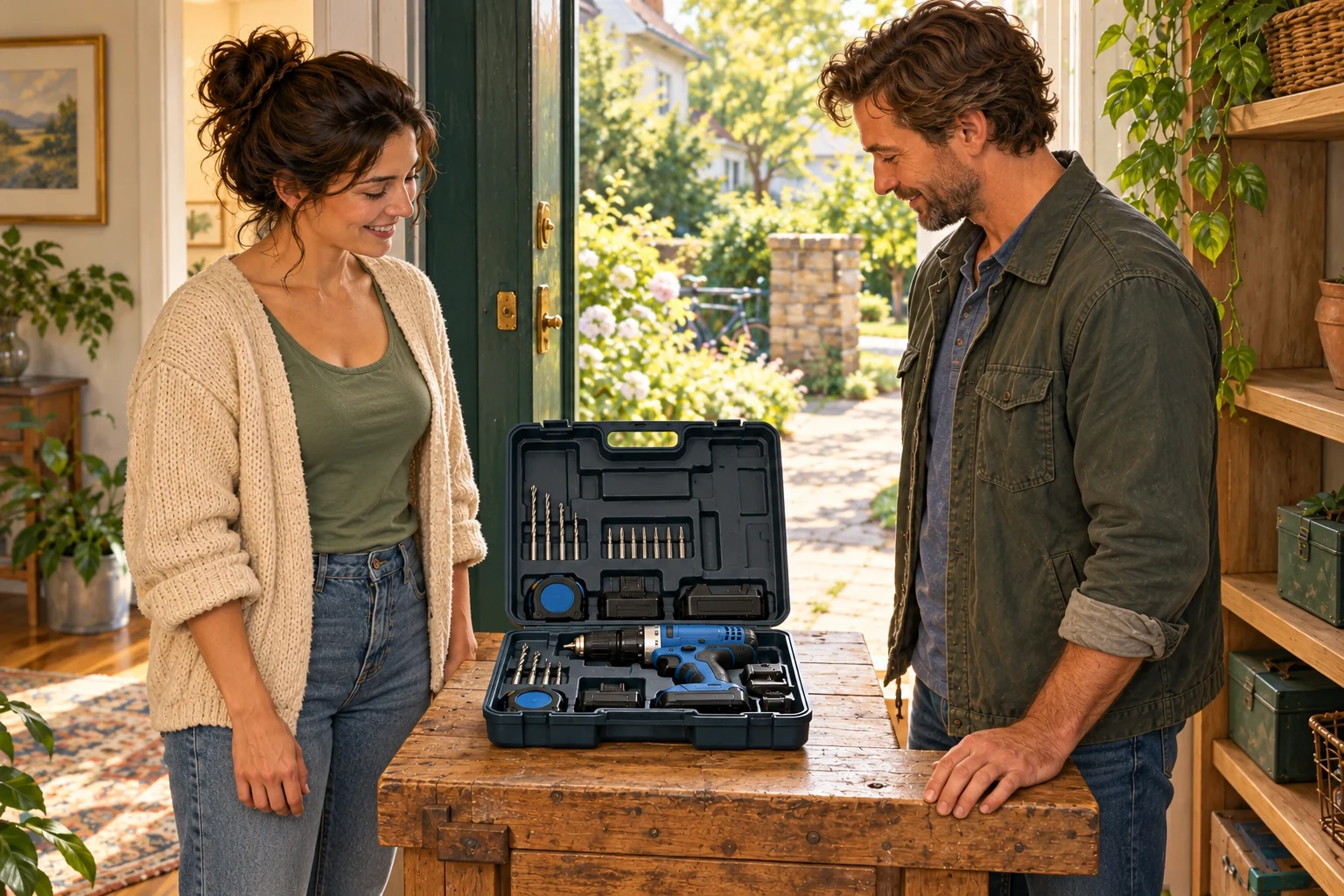
A borrowed object arrives with an invisible second object attached: somebody else’s confidence that it will come back. The first object may be a drill, a casserole dish, a book, or a folding table. The second is harder to replace and usually less likely to be mentioned when the request is made.
Borrowing can be a lovely ordinary form of cooperation. It lets an object do more useful work and saves people from owning a private version of everything they occasionally need. But the arrangement works better when it has a little more structure than “of course, anytime.”
A minute spent agreeing on the return can spare both people a week of wondering whether it is too soon to mention the drill.
Ask for a real period of time
“Could I borrow your drill?” is missing a useful piece of information. “Could I borrow it Saturday morning and return it by Sunday evening?” gives the owner something they can actually decide. They may need it Sunday afternoon. They may be happy to lend it for a month. Either answer becomes easier when the request has edges.
Describe the task too. A person who knows the tool may realize that it is unsuitable, that you need a different attachment, or that their version is more fragile than it looks. A refusal under those circumstances is useful information, even if it interferes with the pleasant fantasy that the shelf will be up by lunch.
Give the owner an easy way to say no. A favor that can only be declined by inventing an emergency has become an awkward kind of obligation. Say, “No problem if you would rather not lend it,” and accept the answer without asking the owner to prove their reason.
Agree on what is traveling
Small accessories are where an uncomplicated loan can develop a detective plot. The drill returns. The charger remains under a jacket in the borrower’s car. Three weeks later, both households are searching for a black plastic object that looks like several other black plastic objects.
When an item has parts, notice them together at the beginning. A quick photograph can be useful if both people are comfortable with it. Otherwise, a simple spoken inventory may be enough: tool, charger, two batteries, case. Use the least elaborate method that will reliably answer the later question.
Before taking it away, ask about any known quirks. If operating it safely requires instructions, make sure those instructions are available and understood. Borrowing equipment does not create the knowledge needed to use it. For anything hazardous or unfamiliar, getting suitable instruction or choosing a different arrangement is part of a successful loan.
Make the return smaller than the reminder
The owner should not have to maintain the whole loan inside their head. Put the return date in your calendar. Arrange the handover. If you agreed to return it clean or with a consumable replaced, include that work in your plan rather than discovering it at the doorstep.
Return the item in the condition agreed. “Better” is not always a safe assumption: an owner may not want you to wash, sharpen, repair, or modify something in a way they have not approved. When in doubt, ask instead of presenting a surprise improvement as a gift the other person is now obliged to appreciate.
If you need more time, ask before the agreed return. Explain what you need and let the owner answer. Extending a loan by becoming difficult to reach is an effective way to make the object expensive in a currency neither person intended to spend.
Handle the awkward part early
Things break. A good borrower notices and tells the owner promptly. That conversation is less comfortable than placing the damaged item quietly in its case, but considerably kinder to the person who will otherwise discover the problem when they need it.
Explain what happened without making the explanation do the work of an apology. Offer to discuss a reasonable repair or replacement. The owner may know details you do not: the exact model, a warranty issue, a particular feature that matters. Buying the first vaguely similar object can turn one problem into a second negotiation.
For valuable equipment or arrangements between people who do not know one another well, clearer written terms may be sensible. The level of formality should fit the stakes and the relationship. A soup pot and a commercial machine do not require identical conversations simply because both can be carried out of a building.
Be equally clear when you lend
The lender has responsibilities too. Say whether you genuinely want the object back by a particular date. Explain important limitations. Do not lend something cheerfully while privately expecting the borrower to infer a set of conditions you have chosen not to mention.
It is also reasonable to have things you do not lend. You may rely on them for work, care about them sentimentally, or find the risk uncomfortable. A simple boundary is often kinder than a resentful yes followed by a period of silently monitoring somebody else’s weekend.
You can help in another way if you want to. You might show the person where to rent the right tool or offer advice about the task. You do not need to invent an alternative to earn the right to keep your own belongings.
Give the relationship an easy next time
A successful loan ends with a returned object and a small confirmation that the arrangement is complete. There is no outstanding charger, uncertain date, or conversation everyone is trying not to start. Both people can stop tracking it.
The reward is larger than the temporary use of a drill. It is the possibility of asking and offering again without a cloud forming over the doorway. The next time you ask, the owner remembers that Sunday evening meant Sunday evening, and that the charger came home too.