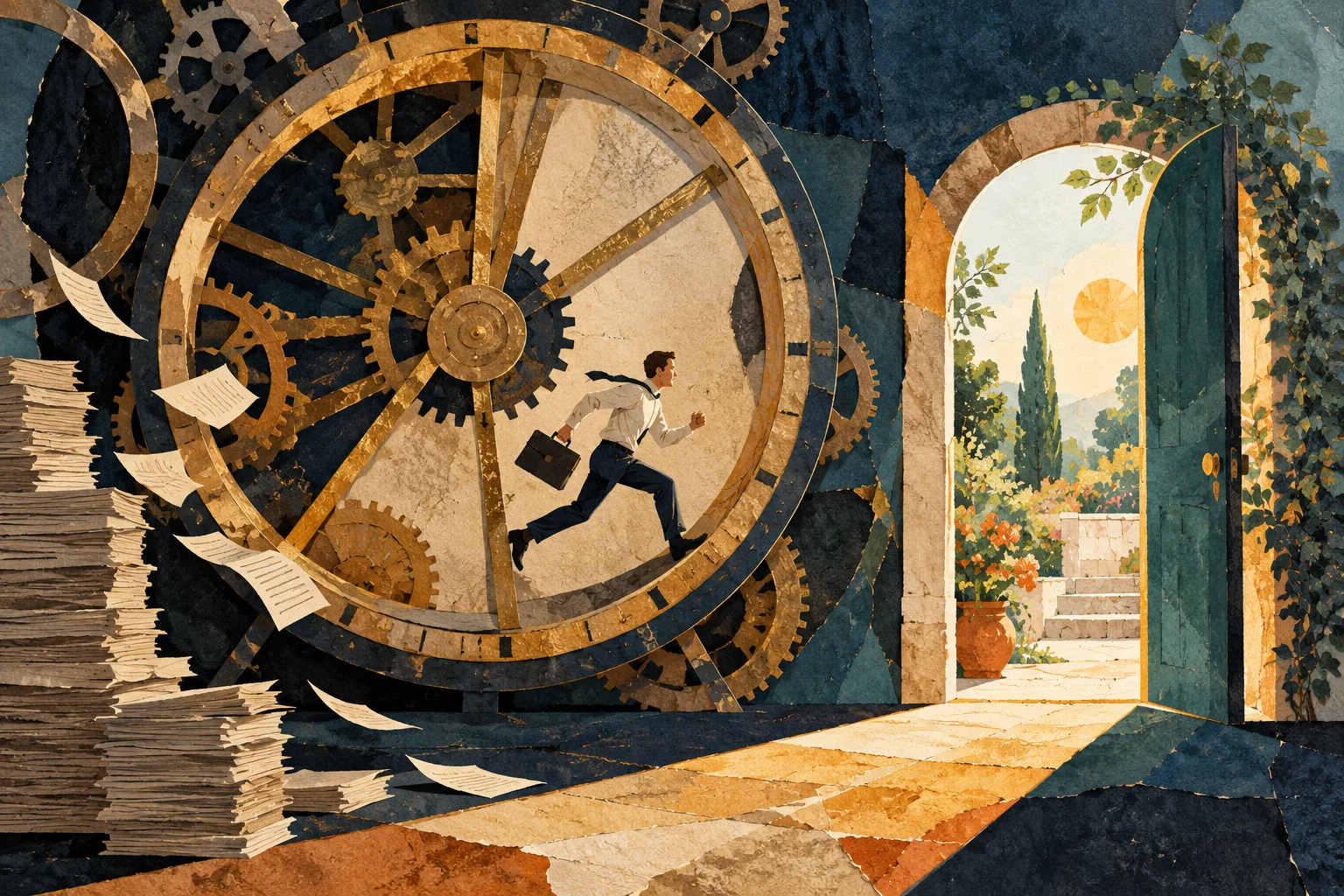
For most of human history, information was scarce. Books were expensive. Expertise was difficult to reach. A person who knew the answer to an obscure question possessed something valuable because the answer itself was hard to obtain.
Artificial intelligence changes that arrangement. It can generate explanations, plans, drafts, summaries, code, images and arguments in seconds. The cost of producing a plausible answer is collapsing. That is useful. It is also disorienting.
When everyone can summon an answer, the advantage shifts. The scarce resource becomes the ability to judge the answer.
Knowing and judging are different jobs
Knowledge asks: what is true? Judgment asks a messier set of questions. Is this true enough for the decision I am making? What is missing? Who benefits if I believe it? What evidence would change my mind? Is the model reasoning from facts, from patterns, or from a confident imitation of reasoning?
A spreadsheet can calculate. A model can propose. Neither one owns the consequences. The person making the decision still has to decide what counts as acceptable evidence, acceptable risk and acceptable uncertainty.
AI does not eliminate the need to think. It moves thinking upstream.
Instead of spending all our effort producing first drafts, we increasingly spend effort framing problems, setting constraints, checking assumptions and recognizing when a polished output has quietly answered the wrong question.
The prompt is not the important part
There is an understandable obsession with “prompt engineering.” Better instructions usually do produce better results. But the deeper skill is problem formulation. A perfectly written prompt cannot rescue a poorly defined goal.
Consider a manager asking an AI system how to reduce customer wait times. The model may suggest staffing changes, automation or appointment scheduling. But perhaps the real problem is not average wait time. Perhaps it is unpredictable wait time. Perhaps customers tolerate twenty minutes when they know it will be twenty minutes, but hate ten minutes when they were promised two.
The difference matters. One question leads to labor optimization. The other leads to expectation management and process visibility. The intelligence is partly in seeing which problem exists.
Three habits become more valuable
1. Ask what would falsify the answer
A useful answer should expose itself to failure. Ask what evidence would prove it wrong. If no possible evidence could change the conclusion, you are dealing with a belief or a slogan, not an analysis.
2. Separate confidence from correctness
Human beings already confuse eloquence with competence. Generative systems make that mistake easier because fluency is their default interface. A smooth answer may be excellent. It may also be beautifully wrong. Confidence should never be accepted as a substitute for verification.
3. Preserve responsibility
“The AI said so” is not a decision process. If a recommendation affects money, health, safety, employment, reputation or rights, a person or institution must remain accountable for the outcome. Delegating work is not the same as delegating responsibility.
The last human skill is not one skill
Judgment is a bundle: curiosity, skepticism, moral reasoning, domain knowledge, emotional restraint and the willingness to say “I don’t know yet.” These qualities do not become obsolete because machines improve. They become the interface through which machine capability becomes either useful or dangerous.
We are entering a period when competent-looking output will be abundant. The temptation will be to move faster simply because we can. But speed is not intelligence. Sometimes the best use of a powerful tool is to make a decision faster. Sometimes it is to use the saved time to think longer.
Practical test: before accepting an AI-generated recommendation, write down the decision, the evidence it relies on, the most important uncertainty, and one reason the answer might be wrong. Four lines can prevent a surprising amount of bad automation.
Abundance changes what we value
Calculators did not make mathematics irrelevant. Search engines did not make knowledge irrelevant. Cameras did not make seeing irrelevant. New tools usually reduce the value of one layer of effort and increase the value of another.
AI is doing the same. It is making production easier and evaluation harder. The future may belong less to the person who can create the most answers and more to the person who can recognize which answer deserves to become reality.
Stay curious.
Martin Lumen