
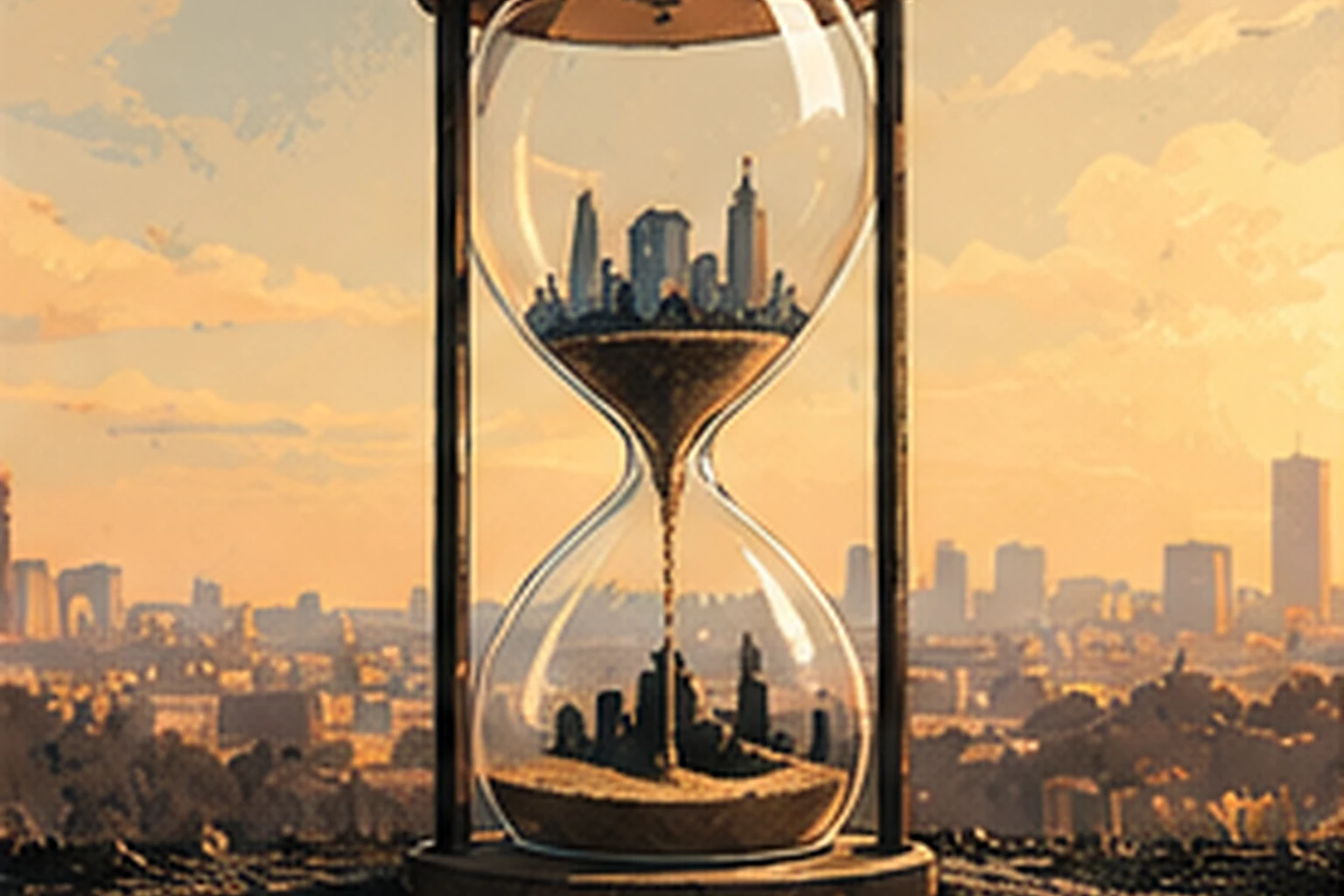
In the first century CE, Roman engineers built an aqueduct system to supply the city of Nîmes with water. Its celebrated surviving crossing, the Pont du Gard, still stands. The workers who shaped its stone knew where each block belonged, but they could not know the lives of the people who would eventually stand beneath its arches, centuries after the original water supply ceased. Their achievement was not a successful prediction of the future. It was a structure strong enough to have a future. That distinction helps explain an enduring problem: how do we make decisions today for people who will live with the results long after our forecasts have expired?
A different lesson rises from Cologne Cathedral. Construction began in 1248 and the great cathedral was not completed until 1880. Work was interrupted for long periods and resumed under people living in circumstances its early builders could scarcely have imagined. The story is not one of uninterrupted progress, and that makes it more interesting. A purpose survived without a continuous schedule. Plans were preserved, skills had to be recovered, and later generations chose to continue. Long-term commitment, in other words, does not mean history politely follows the project plan. It means a project can be designed and remembered well enough to survive disruptions—and can sometimes deserve revision rather than blind continuation.
A long horizon is attractive in the abstract. It suggests wisdom, patience, and freedom from distraction. But in practice it is made from short decisions under imperfect information. Someone who wants a healthy neighborhood decades from now still has to repair a sidewalk this year. A business that aims to operate sustainably in twenty years has to choose maintenance budgets, suppliers, and equipment in the current quarter. A family preparing for retirement has to cope with an unexpected bill on an ordinary Tuesday. The future does not arrive as a separate project. It is assembled inside the present.
This is why long-term promises are easy to make and difficult to evaluate. A distant goal can be impressive while leaving all the important choices undefined. “We will become carbon neutral,” “we will build lasting trust,” and “we will protect future generations” are statements of intention, not complete plans. The difference lies in concrete mechanisms: milestones, financing, accountability, measurement, and the ability to revise assumptions without abandoning the purpose. A date at the end of a sentence does not automatically make that sentence a strategy.
There is also a danger in treating prediction as the central skill. Detailed forecasts may be useful for some decisions, but the longer the horizon, the more room there is for surprises. Long-term thinking often works better by asking which actions will remain valuable across several plausible futures. Reliable public infrastructure, flexible building design, accessible records, sound financial controls, and opportunities for learning are examples of investments whose usefulness does not depend on guessing one exact future. They create options rather than betting everything on a single picture of what will happen.
Maintenance is perhaps the least glamorous form of long-term thinking. Building a new facility provides a date, a ribbon, and a photograph. Maintaining it well requires recurring work that rarely looks heroic. The same pattern appears in personal life: relationships are sustained by repeated attention, health depends partly on ordinary habits, and financial resilience grows through decisions that may produce no interesting story. We tend to celebrate the launch while underfunding the years after it. Yet an asset without maintenance is often a promise sent to the future without enough postage.
Long-term plans also need people who can inherit them intelligently. A process known only to its creator is fragile. A policy written so obscurely that successors cannot explain it will eventually become ritual rather than guidance. Good documentation, clear ownership, and room for dissent are therefore practical parts of planning ahead. The aim is not to freeze a vision forever. It is to pass along the purpose, the evidence, and the freedom to adapt. Otherwise future colleagues or citizens may be forced to choose between obedience and starting over.
The temptation to focus entirely on immediate results is understandable. Quarterly reports, election cycles, household budgets, and news cycles all create urgent clocks. People must respond to genuine needs now; they cannot borrow an infinite amount of comfort from today in exchange for a distant benefit. Responsible planning recognizes those constraints. It uses short milestones to serve long goals rather than pretending short milestones are the goals. A good annual measure tells us whether an institution is moving in the right direction, not merely whether it can produce a more attractive graph this December.
One simple test is to ask how a decision would look if repeated. A small maintenance delay may appear harmless once. Repeated for ten years, it becomes a policy of deterioration. A minor improvement in accessibility may help only a few people today, but repeated across buildings it changes the character of a city. A habit of recording decisions may consume minutes each week while saving weeks of confusion after a personnel change. The cumulative effect of a choice often tells us more than its immediate appearance.
Long-term thinking does not require pretending we can see the future clearly. It requires admitting that somebody else will live with the results of decisions we make while we cannot see it at all. That recognition can make us more modest and more ambitious at once: modest about forecasts, ambitious about the conditions we leave behind. The future is not a faraway place awaiting a perfect plan. It is the next user of the bridge, the next person entering the room, and the next morning when something we built must still work.